Trust Block & Editorial Integrity
Reviewed by: Certified Professional Dog Trainer (CPDT-KA)
Methodology: LIMA-compliant (Least Intrusive, Minimally Aversive), force-free positive reinforcement
Last Updated: September 2026
Local Context: Knox County and East Tennessee environmental conditions
Finding effective dog training knoxville tn solutions requires choosing between crowded group classes at retail chains or immediate at-home behavior modification. Local pet owners often encounter long waiting lists for store classes that may not address specific home behaviors. Digital step-by-step training guides provide a low-stress, immediate alternative designed to build lasting focus in distracting real-world settings.
Table of Contents
Quick Answer: What is the Best Dog Training Option in Knoxville, TN?
The best dog training option in Knoxville, TN depends on your dog’s stress threshold and your schedule. While big-box retail classes offer basic social exposure, self-paced positive reinforcement programs allow owners to address leash pulling, reactivity, and house manners immediately at home for a fraction of the cost.
How Do Local Store Classes Compare to Dog Training Knoxville TN Options?
At-home digital training provides flexible, low-stress behavior modification for dogs overwhelmed by commercial retail environments, while local store classes offer structured group exposure. Digital guides cost significantly less, allow immediate start dates, and focus on real-world distractors tailored specifically to your home environment.
Selecting the right training format directly impacts how quickly your canine retains core behaviors. Many pet parents in East Tennessee automatically reserve a spot in local retail group classes without evaluating whether their dog’s temperament fits a high-arousal environment.
Evaluating costs, scheduling constraints, and environmental stressors helps identify the most effective pathway for your household.
| Evaluation Criteria | Big-Box Retail Classes (PetSmart / Petco) | At-Home Digital eBooks & Guides (dogstraining.us) | Local Private In-Person Trainers |
| Average Cost | $140 – $220 per 6-week course | $27 – $47 one-time access | $120 – $250 per single hour |
| Schedule Flexibility | Rigid weekly time slots | 100% self-paced, 24/7 access | Requires coordinated scheduling |
| Training Environment | High-distraction store aisles | Low-stress home setting | Variable (Home or facility) |
| Reactivity Suitability | Poor (Triggers fear/barking) | Excellent (Controlled thresholds) | High (Customized management) |
| Immediate Availability | 2 to 4 week waitlists | Instant download | 1 to 3 week waitlists |
| Methodology | Standardized basic obedience | Positive reinforcement (LIMA) | Varies widely by trainer |
Big-Box Retail Classes in Knoxville
Retail store classes along Kingston Pike or Turkey Creek gather multiple dogs in open sales-floor enclosures. Bright lights, shopping carts, and unfamiliar smells frequently push sensitive dogs over their stress threshold before training even starts.
Here is what actually happens when a nervous dog enters a retail group class: a six-month-old Golden Retriever named Bella attended her first week at a local store. Overwhelmed by squeaky toys and passing shoppers, she barked uncontrollably and refused treats, leaving her owner stressed and unable to practice basic cues.
When a dog experiences environmental overload, cortisol levels spike and block learning pathways. Forcing an anxious dog into a commercial store setting often reinforces fear-based reactions rather than settling them down.
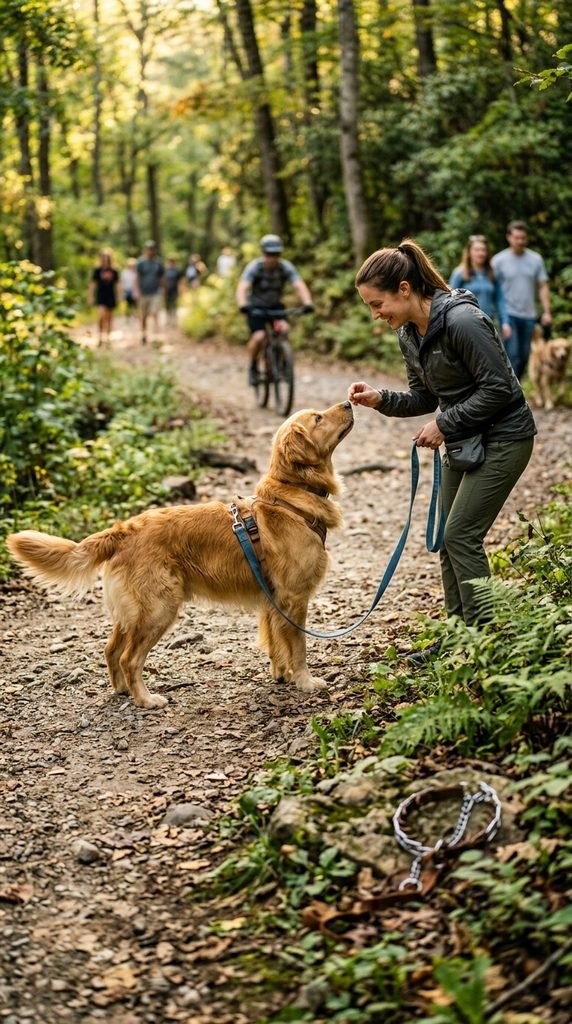
At-Home Digital Training Programs and eBooks (dogstraining.us)
Self-paced digital programs eliminate high-stress public environments by establishing solid behavioral foundations inside your living room first. Working in familiar surroundings allows your dog to process new cues without competing environmental triggers.
By leveraging expert-written materials like Dogs Training eBooks, owners build reliable marker
responses and impulse control at their own pace. You can review foundational modules repeatedly without paying extra fees or falling behind a group schedule.
Once foundational cues are solid at home, you can systematically transfer those behaviors to outdoor environments across Knox County. Reviewing clear dogstraining.us pricing options shows how digital programs provide comprehensive lifetime access for less than the price of a single group lesson.
Key Takeaway: At-home digital training eliminates environmental stress, saving time and money while building stronger behavioral foundations before introducing outdoor distractions.
Why Force-Free Positive Reinforcement Works Best for East Tennessee Dogs
Force-free positive reinforcement uses high-value rewards to mark and strengthen desired behaviors without inducing fear, pain, or physical intimidation. This scientific methodology builds confident canine companions capable of navigating crowded public places while keeping their focus entirely on you.
Humane training methods prioritize clear communication over physical control. Using positive reinforcement ensures your dog remains an eager partner during training sessions.
The Science of Positive Reinforcement and Operant Conditioning
Operant conditioning demonstrates that dogs repeat behaviors that produce pleasant outcomes. When a puppy sits and immediately receives a treat, brain chemistry releases dopamine, cementing that physical action as a rewarding choice.
The American Kennel Club emphasizes that positive reinforcement accelerates skill retention while preserving the human-canine bond. Punishing a dog for unwanted behavior merely suppresses outward signs without resolving the underlying emotional state.
Using precise marker timing—such as a clicker or a verbal “yes”—bridges the gap between the desired behavior and the reward delivery. Clear feedback eliminates confusion, allowing dogs to learn complex behaviors rapidly.
Why Aversive Tools Fail on Distracting Knoxville Trails
Using prong collars, choke chains, or e-collars on busy trails like Concord Park or Ijams Nature Center creates severe behavioral risks. Aversive tools rely on discomfort or pain to stop unwanted actions, which frequently causes negative emotional associations.
When a dog feels physical pain from a tight collar while looking at an approaching leashed dog, they learn to associate other dogs with discomfort. This mechanism often transforms simple excitement into intense leash reactivity and defensive aggression over time.
According to research published by the American Veterinary Medical Association, shock and pinch collars increase stress markers and elevated cortisol levels in dogs. Positive reinforcement protocols teach your dog to focus on you voluntarily, even when deer or other pets cross your trail.
Key Takeaway: Science-backed positive reinforcement treats the root cause of behavior issues, preventing the dangerous fallout risks associated with pain-based training tools.
Printable 8-Week Knoxville Dog Training and Socialization Schedule (Verified for 2026)
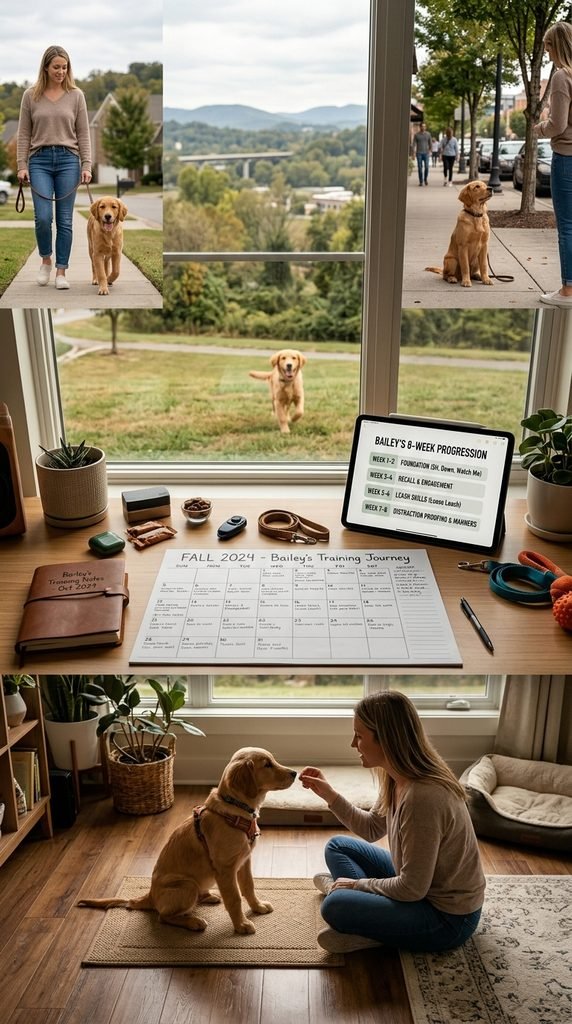
This structured 8-week routine guides dog owners through progressive daily training blocks, moving from low-distraction indoor practice to real-world environments across Knox County.
Follow this day-by-day protocol to build reliable obedience cues, desensitize environmental triggers, and establish consistent house manners.
| Week | Primary Focus Area | Daily Training Routine (10–15 Mins/Day) | Local Knoxville Environmental Target | Success Criteria Benchmark |
| Week 1 | Name Recognition & Marker Loading | 50 repetitions of Name -> Marker -> Treat; reward voluntary eye contact. | Quiet living room or enclosed hallway. | 95% instant eye contact upon hearing name. |
| Week 2 | Sit, Down, & Impulse Control | Practice “Sit-Wait” at doorways and before meal bowls for 30–60 seconds. | Kitchen and front entryway. | Holds stay position for 60 seconds with family moving. |
| Week 3 | Loose-Leash Walking Foundations | “Yield to leash pressure” game; reward position at your hip with treats. | Backyard or quiet private driveway. | Walks 20 steps without tension on the leash. |
| Week 4 | Reliable Recall & Touch Cue | Target hand palm with nose (“Touch”); emergency recall whistle practice. | Fenced yard or long-line in a quiet field. | Responds to recall cue within 3 seconds on a 15ft line. |
| Week 5 | Public Distraction Proofing | Practice focus exercises (“Look at Me”) while vehicles and bikes pass. | Suburban Knox County neighborhood sidewalk. | Maintains eye contact for 5 seconds as distractions pass. |
| Week 6 | Environmental Socialization | Parallel walking at distance from triggers; rewarding neutral calm behavior. | Outer parking lots near Lakeshore Park. | Remains calm 30 feet away from other leashed dogs. |
| Week 7 | Urban Navigation & Manners | Settling on a mat; polite greetings without jumping on strangers. | Outdoor seating perimeters near Market Square. | Holds a 3-minute mat settle while people walk past. |
| Week 8 | Advanced Trail & Public Reliability | Heel position changes, leave-it around wildlife scents, long-line recall. | Greenway paths at Concord Park or Ijams. | Complete 20-minute walk with zero leash pulling. |
Weeks 1 to 4: Foundation Behaviors and Home Triage
The first month of training focuses exclusively on establishing clear communication within low-distraction spaces. Rushing a dog into public settings before perfecting indoor focus leads to frustration and inconsistent performance.
Begin by teaching your dog that paying attention to you yields immediate value. Utilize daily meal kibble as training rewards to increase engagement without overfeeding.
Addressing crate training, doorway manners, and biting during these initial weeks prevents bad habits from becoming ingrained daily behaviors.
Weeks 5 to 8: Distraction Proofing Around Knox County
Once your dog executes basic cues indoors with an 80% success rate, systematically introduce higher environmental criteria. Gradually increase distance, duration, and distraction parameters during outdoor practice.
Expose your dog to novel sights and sounds at local venues while keeping them below their reactivity threshold. Position yourself at a safe distance from foot traffic near neighborhood parks to practice voluntary eye contact.
If your dog displays signs of stress or loses focus, increase your working distance from the trigger immediately. Systematic desensitization builds reliable real-world manners without overwhelming your dog’s nervous system.
+-------------------------------------------------------------------+
|               KNOXVILLE DISTRACTION PROOFING LADDER               |
|                                                                   |
| [Level 4: High]   Market Square Outdoor Perimeters / Busy Festivals|
| [Level 3: Med-Hi] Lakeshore Park Greenways (15-20 ft distance)     |
| [Level 2: Medium] Neighborhood Sidewalks & Quiet Park Edges       |
| [Level 1: Low]    Living Room / Quiet Backyard (Baseline Focus)   |
+-------------------------------------------------------------------+
Key Takeaway: Systematic proofing across progressive distraction levels ensures your dog executes cues reliably anywhere in Knox County.
How Do I Stop Common Dog Training Knoxville TN Regressions at Home?
Stop behavioral regressions by lowering distraction levels, increasing reward frequency, and verifying that your dog is not experiencing hidden physical pain or sensory overload. Consistent management prevents dogs from practicing unwanted behaviors during retraining phases.
Behavioral progress rarely follows a straight line. Unplanned schedule changes, weather shifts, or developmental stages can cause temporary setbacks in loose-leash walking or impulse control.
Identifying environmental triggers early allows you to adjust management strategies before unwanted habits reform.
Managing Leash Reactivity Near Local Parks
Leash reactivity usually stems from fear, frustration, or barrier altered perception rather than a desire for dominance. When a leashed dog lunges at another pet near park greenways, they are attempting to create space or express frustration.
Apply counter-conditioning methods by rewarding your dog the instant they spot another pet from a safe distance. Deliver high-value treats continuously while the trigger remains visible, then stop feeding when the trigger passes out of sight.
Over repeated trials, your dog learns that seeing another leashed pet predicts positive outcomes, changing their emotional reaction from alarm to calm focus.
Fixing Excessive Barking in Knoxville Apartments and Neighborhoods
Barking at doorbells, passing neighbors, or hallway noises is a self-reinforcing alert behavior. Yelling at your dog when they bark adds energy to the situation, making them believe you are barking along with them.
The ASPCA recommends managing environmental exposure by using window privacy film and white noise machines to block visual and auditory triggers. Combine management with differential reinforcement by teaching your dog an incompatible behavior, such as running to a designated mat when the doorbell rings.
Practice this mat routine daily without using the doorbell first. Once the mat response is automatic, introduce low-volume doorbell recordings to proof the behavior indoors.
Key Takeaway: Controlling environmental triggers while reinforcing alternative behaviors halts regressions and stops nuisance barking effectively.
When Should You Consult a Certified Veterinary Behaviorist?
You should consult a certified veterinary behaviorist if your dog exhibits severe aggression, sudden bite attempts, intense resource guarding, or debilitating separation anxiety. Complex behavioral issues require specialized diagnostic assessments to exclude underlying medical causes.
Safety remains the highest priority when addressing severe behavior problems. If your dog inflicts bites that break skin, displays unpredictable aggression toward family members, or self-injures during panic episodes, seek professional clinical intervention immediately.
Always consult a certified veterinary behaviorist (DACVB) or a Certified Applied Animal Behaviorist (CAAB) for severe aggression. Working alongside veterinary experts ensures your dog receives appropriate medical, environmental, and behavioral intervention.
If you have questions regarding digital guide suitability for your dog’s specific behavioral history, reach out to the Dogs Training support team for direct assistance.
Frequently Asked Questions About Dog Training Knoxville TN
How much does dog training knoxville tn typically cost?
Local Knoxville group classes range from $140 to $220 for a 6-week session, while private in-person training costs $120 to $250 per hour. Digital step-by-step training guides cost between $27 and $47, delivering comprehensive lifetime instruction at a fraction of in-person fees.
What is the best age to start puppy training?
Puppy training should start the day your puppy comes home, typically around 8 weeks of age. Early positive reinforcement focuses on house training, crate comfort, gentle handling, and basic impulse control before bad habits form.
Are online dog training programs effective compared to local classes?
Online dog training programs are highly effective because they teach skills in low-stress home settings where dogs learn fastest. Owners gain flexible instruction while avoiding the overwhelming distractions and high costs associated with commercial retail group classes.
How do I stop my dog from pulling on the leash during walks?
Stop leash pulling by turning around or stopping completely the moment tension hits the leash. Reward your dog with high-value treats every time they walk by your hip with a slack leash, making staying near you more rewarding than pulling forward.
What should I bring to my dog’s first training session?
Bring a standard 6-foot flat leash, a well-fitted harness, high-value pea-sized treats, and your dog’s favorite reward toy. Avoid choke chains, prong collars, or retractable leashes, as these tools impede humane learning and increase physical stress.
Start Your Dog’s Transformation Today
Building a well-behaved dog does not require expensive store classes or stressful weekly commutes across town. By applying proven positive reinforcement methods at home, you establish clear communication and lasting focus in the environments your dog encounters every day.
Download expert-designed, self-paced digital guides to address
leash pulling, puppy biting, and reactivity instantly. Take control of your dog’s behavioral progress today with the flexible, force-free resources available through Dogs Training eBooks.