Quick-Start Trust Block
- Reviewed By: Certified Professional Dog Trainer (CPDT-KA) & Behavioral Specialist
- Core Methodology: LIMA-Compliant, Force-Free Positive Reinforcement
- Last Updated: Verified for 2026 Standards
Table of Contents
Quick Answer: What is the best dog training approach in Nashville?
The best dog training in Nashville, TN combines immediate reward-based household management with structured behavioral modification. While big-box retail stores offer basic group socialization, self-paced digital programs from dogstraining.us deliver immediate, force-free tools to solve biting, reactivity, and house-soiling directly inside your home environment.
Navigating the options for dog training nashville tn requires balancing your immediate household needs with your budget and schedule. Retail chain classes at PetSmart or Petco on West End or in Hundred Oaks often force owners into rigid six-week timelines. These group environments can easily overwhelm fearful puppies or reactive rescue dogs.
Here is what actually happens when a owner brings a reactive golden retriever to a store class: the high-distraction retail aisle drives the dog over its emotional threshold before training even begins. The owner leaves stressed, while the underlying home behavior remains completely unaddressed. Self-paced digital instruction allows you to establish solid foundational mechanics in a low-distraction living room before adding outdoor real-world triggers.
Key Takeaway: Real behavioral transformation starts at home in a low-distraction space before testing your dog in public spaces.
What is the most effective methodology for dog training nashville tn owners?
Positive reinforcement using reward-based mark-and-reward timing is the most scientifically validated training methodology for dogs. According to the American Veterinary Society of Animal Behavior (AVSAB) position statement, force-free techniques build lasting trust, eliminate fear-based anxiety, and achieve higher long-term compliance compared to aversive shock collars or choke chains.
Canine psychology operates on operant conditioning and classical association. When a dog performs a desired behavior, such as sitting quietly at the front door, marking that exact second with a clicker or word like “yes” followed by a high-value reward seals the learning loop. Aversive methods like prong collars or shock units simply suppress behavior through intimidation, which often explodes later into defensive aggression.
Here is what actually happens when an owner uses aversive correction for leash barking: the dog learns that seeing another dog equals physical pain on its neck. Instead of stopping the reaction, the dog grows more fearful and reactive toward other animals over time.
Selecting a humane trainer means asking direct questions about tools. You should walk away from any local facility that mandates pinch collars, dominant alpha-roll techniques, or electronic collars. You can explore our comprehensive self-paced dog training ebooks to master reward timing and force-free mechanics right from your phone.
Key Takeaway: Reward-based marker training fixes root behavioral causes, whereas physical punishment creates hidden fear and future aggression.
How do I choose between self-paced ebooks and local weekly store classes for dog training nashville tn?
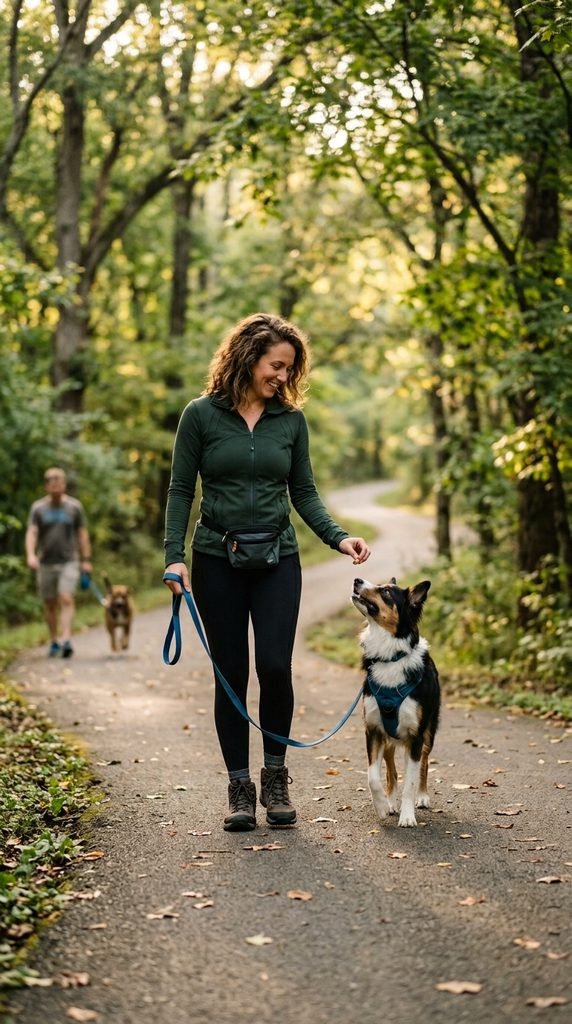
Choosing between digital ebooks and weekly retail store classes depends on your budget, schedule, and immediate behavioral needs. Self-paced digital guides offer instant home access for under fifty dollars, whereas local weekly store classes require fixed physical attendance, cost hundreds, and often lack customized home troubleshooting.
Many local owners turn to online forums searching for terms like dog training reddit to evaluate whether local store classes are worth the expense. Users frequently report that weekly retail classes spend half the hour managing eight distracted dogs rather than teaching mechanics. Self-paced digital materials let you move at your dog’s natural learning speed without paying hundreds of dollars for basic group command repetition.
| Evaluation Criteria | Self-Paced Digital Ebooks (dogstraining.us) | Retail Store Classes (PetSmart / Petco) | Private In-Home Nashville Trainer |
| Upfront Cost | $20 – $50 total | $140 – $250 per 6-week block | $150 – $300 per single hour |
| Immediate Availability | Instant download access | 2 to 4 week waitlist | 3 to 6 week scheduling delay |
| Environment Control | Zero distraction (Your Home) | High distraction (Store Aisles) | Low to Medium (Your Home/Yard) |
| Customization | Flexible to dog’s pace | Rigid 6-week fixed syllabus | Highly customized to family |
| Methodology Guarantees | 100% Positive Reinforcement | Varies by individual employee | Varies widely (Force-Free vs Balanced) |
| Troubleshooting Support | Direct daily references | Limited to class hour | Limited to scheduled session |
Evaluating options for dog training nashville tn means looking closely at actual value and convenience. Retail classes work adequately for basic puppy playtime if your dog is completely neutral to strangers. However, for solving specific home issues like counter-surfing, crate crying, or door darting, digital guides provide clear step-by-step blueprints at a fraction of the cost. You can review transparent digital package pricing to select the right guide for your household.
Here is what actually happens during a store class session: a nervous rescue dog spends 45 minutes trembling under a shelf while the trainer reviews simple sit-stays with calm puppies. Digital materials solve this by letting you build confidence step-by-step in your living room first.
Key Takeaway: Digital guides provide instant, low-cost home solutions that eliminate the environmental stress and scheduling hassles of retail group classes.
The 8-Week Nashville Puppy Socialization and Daily Routine Chart
The 8-week puppy socialization chart aligns critical canine biological development windows from eight to sixteen weeks of age with specific daily exposure targets. Following a structured schedule prevents behavioral fear responses, builds environmental resilience, and ensures your puppy successfully adjusts to new sights, sounds, surfaces, and social interactions.
The developmental window between 8 and 16 weeks of age determines how your dog reacts to the world for the rest of its life. According to the ASPCA Puppy Socialization Guidelines, exposure must be positive, controlled, and non-overwhelming.
The 8-Week Nashville Puppy Socialization Chart (Verified for 2026)
| Week & Developmental Stage | Daily Exposure Focus | Local Nashville Environment Example | Positive Reinforcement Target |
| Week 1 (8-9 Weeks) Home Adaptation | Soft indoor sounds, carpet textures, gentle body handling | Quiet home living room, handling paws and ears | 5 treat-marked sits while touching paws and collar |
| Week 2 (9-10 Weeks) Surface & Object Confidence | Walking on wood, tile, metal grates, moving cardboard boxes | Home kitchen, back patio, driveway edge | Confident steps over 3 different floor textures |
| Week 3 (10-11 Weeks) Visual & Gear Desensitization | Umbrellas opening, people wearing hats, high-vis vests | Front porch observation of passing mail carriers | Neutral calm watching strangers without barking |
| Week 4 (11-12 Weeks) Auditory Conditioning | Lawn mowers, traffic noise, vacuums at low volume | Residential side streets in East Nashville | Treat rewards for remaining relaxed near vehicle noise |
| Week 5 (12-13 Weeks) Distance Distance Socialization | Observing calm dogs from inside a parked vehicle | Parking lot perimeter near Centennial Park | Looking at another dog, then looking at you for a treat |
| Week 6 (13-14 Weeks) Handling & Grooming Prep | Brush introduction, nail clipper touch, towel drying | Dedicated home grooming space | Voluntarily resting chin in hand for 10 seconds |
| Week 7 (14-15 Weeks) Public Space Neutrality | Sitting quietly on a mat outdoors, ignoring pedestrians | Outdoor patio seating area in 12 South | 5 minutes of quiet settling while humans sit |
| Week 8 (15-16 Weeks) Controlled Interaction | Brief 3-second greetings with healthy, known dogs | Quiet residential yard playdate | Clean recall away from play after 30 seconds |
Here is what actually happens when an owner rushes socialization: they take an 11-week-old unvaccinated puppy directly into a crowded, noisy farmers market. The puppy gets overwhelmed by towering strangers, backs out of its harness, and develops a lifelong fear of public crowds. Proper socialization means controlled, distance-based positive exposures.
Key Takeaway: Socialization is about building calm neutrality at a comfortable distance, not forcing your puppy to interact with every stranger or dog.
How do I stop my puppy from biting and handle sudden regressions?
Puppy biting and behavioral regressions are addressed by interrupting unwanted mouthiness with an immediate redirection cue and removing all attention for twenty seconds. Consistent repetition teaches puppies impulse control, while structured crate rest prevents overstimulation, which is the primary cause of sudden daily behavioral setbacks.
Puppies explore their environment using their mouths, but sharp teeth on human skin require immediate boundaries. When teeth touch skin or clothing, freeze instantly, emit a neutral “oops” marker, and step out of reach behind a baby gate for 20 seconds. This teaches the puppy that biting causes the fun human to vanish.
Redirection is your second step. Always keep an approved chew toy within arm’s reach during play. The moment teeth approach your hands, present the toy. Praise warmly the second the puppy clamps onto the toy instead of your skin.
Around six to eight months of age, young dogs enter an adolescent fear period and regression phase. Suddenly, a dog that knew sit or stay acts like it has never heard the command before. Do not raise your voice or increase pressure; simply step back to basic luring mechanics and reward the small victories.
Here is what actually happens when an owner yells during a biting frenzy: the puppy views the loud noise and waving hands as high-energy wrestling, increasing the biting intensity.
Managing Leash Reactivity on Busy Nashville Trails
Walking along Shelby Bottoms Greenway or the Richland Creek Trail presents major triggers for young dogs. Bikes, runners, and unleashed dogs can spark sudden leash lunging and barking.
Managing leash reactivity requires the “Look at That” game. The moment your dog notices a passing jogger or leashed dog at a safe distance, mark with your clicker or “yes” before your dog barks, then deliver a high-value treat like boiled chicken. You are changing the emotional response from panic to happy expectation.
Key Takeaway: Interrupt mouthy biting by removing your attention immediately, and tackle trail reactivity by rewarding calm attention from a safe distance.
When should you bypass standard dog training nashville tn for a veterinary behaviorist?
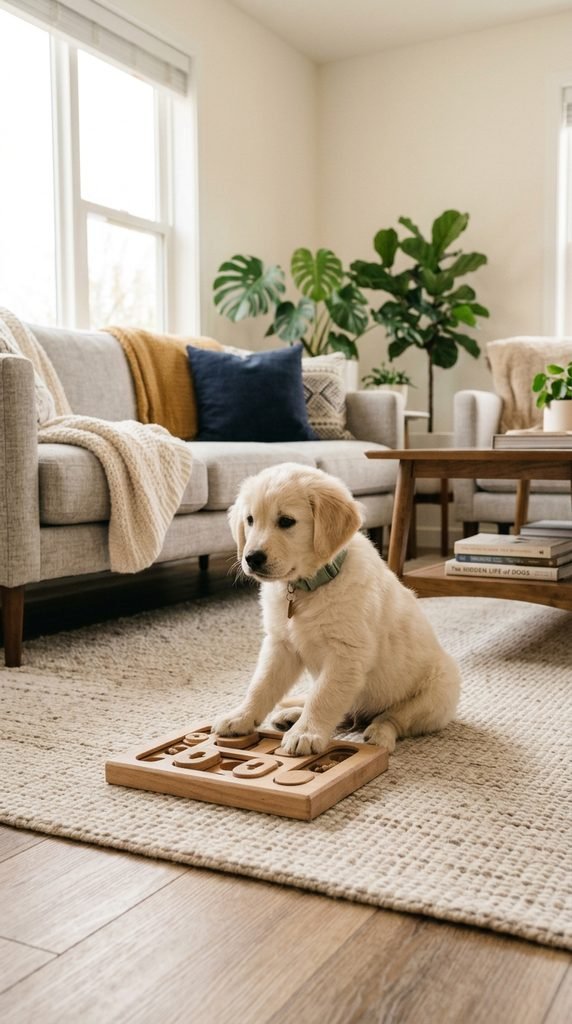
Owners should bypass standard obedience trainers and consult a board-certified veterinary behaviorist whenever a dog exhibits severe fear-based aggression, resource guarding with biting, or self-injurious separation anxiety. Medical evaluations ensure underlying neurological or physical issues are diagnosed before starting specialized behavior modification protocols.
Standard dog trainers and obedience classes excel at teaching skills like sit, down, stay, and loose-leash walking. However, severe behavioral pathologies like sudden unprovoked biting, severe resource guarding against family members, or destructive panic attacks during storms require clinical intervention.
Safety Disclaimer: If your dog exhibits severe unprovoked aggression, skin-breaking bites, or extreme self-injurious panic, discontinue standard obedience work immediately. Consult a board-certified veterinary behaviorist (DACVB) or a licensed veterinarian for a full medical screening and specialized clinical safety plan.
If you suspect your dog’s sudden behavior changes stem from anxiety or discomfort, feel free to contact our certified behavior team to help determine whether digital self-paced guides or direct clinical referral is appropriate.
Here is what actually happens when severe fear aggression is treated with basic obedience commands: the dog is forced to sit near its trigger while panicking inside, leading to a sudden, explosive bite without warning. Clinical cases need systemic desensitization and counterconditioning, not stricter commands.
Key Takeaway: Severe aggression and panic disorders are medical behavioral conditions that require veterinary assessment rather than basic obedience classes.
Frequently Asked Questions About Dog Training in Nashville
Are online dog training classes worth it?
Yes, online dog training classes are highly effective because they teach you to train your dog in your home without retail distractions. Digital guides eliminate commute times, save hundreds of dollars compared to in-person sessions, and allow you to proceed at your dog’s precise learning speed.
How much do dog trainers typically cost in TN?
In Tennessee, group retail store classes cost between $140 and $250 for six weeks. Private in-home training ranges from $150 to $300 per hour. Self-paced digital ebooks provide comprehensive, step-by-step force-free instruction for a single payment of under fifty dollars.
What equipment do I need before starting a dog training program?
You need a standard 6-foot flat nylon leash, a well-fitted front-clip harness, a treat pouch, small soft high-value rewards, and a handheld training clicker. Avoid choke chains, prong collars, or electronic shock devices, as these tools increase anxiety and behavioral risks.
How long does it take to fully potty train a rescue dog?
Most rescue dogs achieve consistent house-training within two to four weeks when managed on a strict outdoor schedule. Establishing regular feeding times, taking the dog out every two hours, and rewarding immediate outdoor elimination prevents accidents and establishes clear household habits.
Can positive reinforcement fix severe separation anxiety?
Positive reinforcement combined with systematic desensitization effectively manages mild to moderate separation anxiety. By rewarding calm behavior during micro-departures lasting only seconds, your dog builds confidence. Severe cases involving self-injury require evaluation by a veterinary behaviorist alongside behavior modification.
How do I locate ethical dog training nashville tn professionals?
Look for certified professionals holding credentials like CPDT-KA or KPA-CTP who adhere to LIMA (Least Intrusive, Minimally Aversive) guidelines. Avoid any trainer who insists on shock collars, heavy leash pops, or dominance theories, as these methods harm canine welfare.
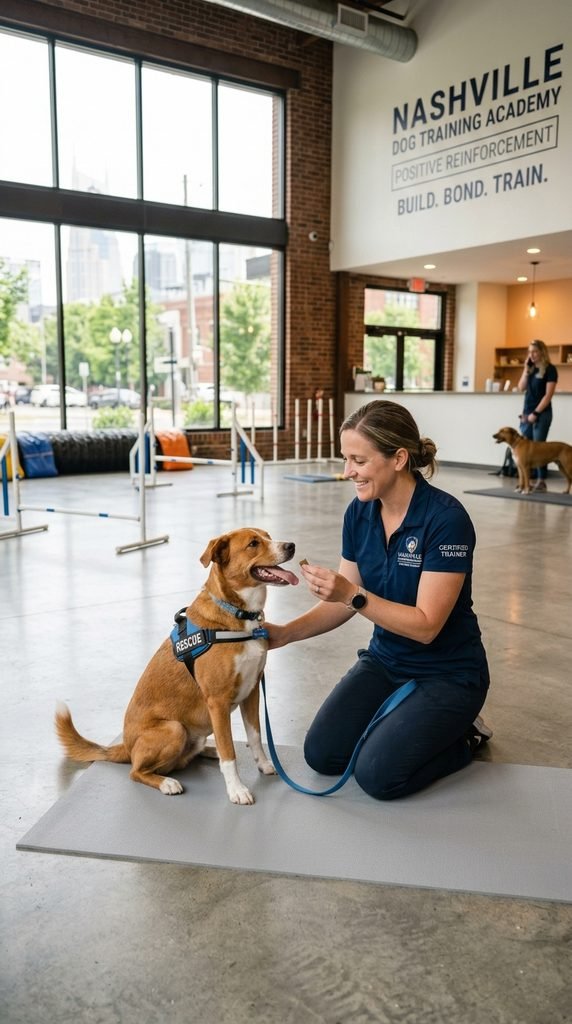
Your Next Step to a Well-Behaved Dog
Stop waiting for a local weekly class opening to start fixing unwanted behaviors. Download our expert-written, positive-reinforcement digital training guides today to establish clear communication, eliminate biting, and build a reliable bond with your dog directly from home.