Trust & Verification Block
- Reviewed By: Certified Professional Dog Trainer (CPDT-KA) & Canine Behavior Consultant
- Methodology Standard: LIMA (Least Intrusive, Minimally Aversive) & Science-Backed Positive Reinforcement
- Last Updated: September 2026
Quick Answer: CATCH Canine Trainers Academy is a New Jersey state-licensed vocational institution that offers distance-learning and mentor-guided programs for aspiring dog trainers. For pet owners who want professional force-free behavior modification without four-figure tuition fees, comprehensive digital guides from dogstraining.us provide immediate, structured at-home solutions.
Table of Contents
Quick-Start Evaluation: What Is CATCH Dog Training Academy?
CATCH Dog Training Academy is a state-licensed vocational school based in New Jersey that offers mentor-guided online and hands-on dog trainer education programs nationwide. Students learn positive reinforcement behavior modification, learning theory, and client consultation skills through structured coursework paired with local certified mentor evaluations.
State approval sets this institution apart from unaccredited online certificate programs. Students enrolled in their Master Class work directly with a local mentor trainer, gaining hands-on exposure to shelter dogs and real client cases. Tuition ranges from basic study options around $1,500 to comprehensive master courses exceeding $4,000.
Here is what actually happens during enrollment: a student receives binder modules detailing canine body language and operant conditioning. They then record videos of handling sessions with shelter dogs, submit them to faculty, and shadows a local professional trainer for live group classes.
While this structure builds real-world career skills, dog owners seeking to resolve home behavior problems often find professional academy study excessive for simple house training or leash pulling.
Key Takeaway: CATCH Dog Training Academy offers state-licensed career training for aspiring professionals, but pet owners can fix everyday behavior issues faster with direct home guides.
What Methodology Does CATCH Dog Training Academy Teach?
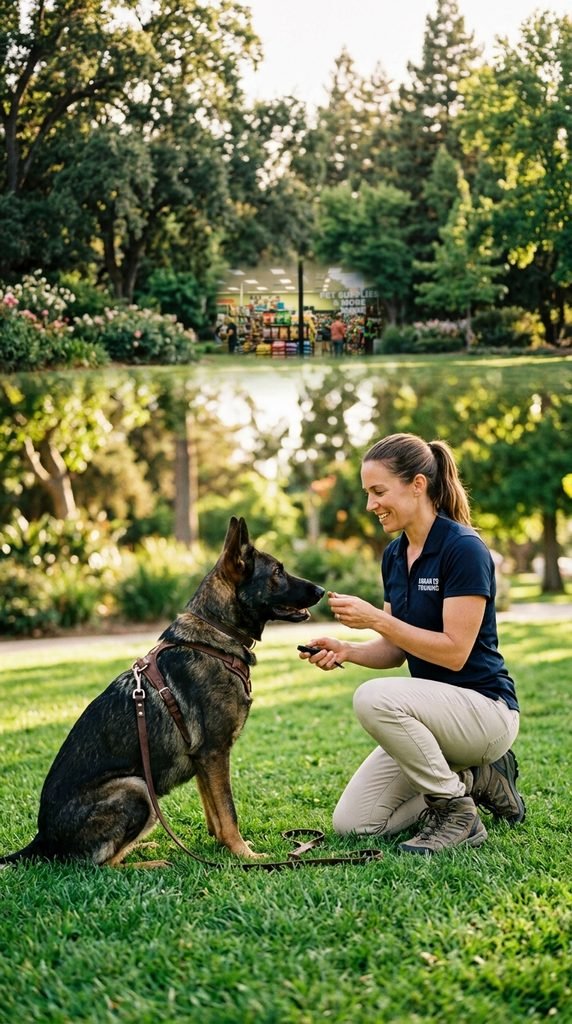
CATCH Dog Training Academy teaches science-backed positive reinforcement methodology grounded in operant conditioning and humane marker-based training mechanics. The curriculum eliminates dominance theory, shock collars, and prong collars, focusing instead on rewarding desired behaviors, managing environmental triggers, and building clear communication between dogs and handlers.
Students learn to mark exact moments of compliance using clickers or verbal markers like “yes.” Reward timing must occur within one second to reinforce the specific behavior. The training model strictly follows humane guidelines established by leading organizations like the Certification Council for Professional Dog Trainers.
Here is what actually happens when teaching a rescue dog leash manners using this science: the trainer marks the instant the leash goes slack and delivers a treat at the handler’s hip. If the dog pulls, the handler stops completely, making forward movement impossible until the dog yields tension.
Understanding these mechanics helps handlers shape behaviors without physical corrections. For pet owners studying canine learning principles at home, Dogs Training materials apply these exact operant conditioning principles to daily routines.
Key Takeaway: CATCH enforces force-free, marker-based positive reinforcement, ensuring handlers build trust without using physical punishment.
How Does CATCH Canine Trainers Academy Compare to Store Classes and Self-Paced Guides?
Professional trainer academies provide comprehensive career certification, whereas big-box retail store classes offer basic group socialization for pets. Comprehensive self-paced digital guides deliver immediate, cost-effective behavior modification protocols for home environments without the rigid schedules or high tuition fees associated with formal vocational academies.
Evaluation Criteria: Cost, Depth, and Hands-On Mentorship
Selecting a dog training educational model requires evaluating four critical parameters: total financial investment, curriculum depth, handler flexibility, and the quality of practical mentorship.
Big-box retail group classes cost between $120 and $200 for a 6-week block. However, they rely on rigid group schedules inside busy retail stores where fearful or reactive dogs easily become overwhelmed. Professional academy tuition runs from $1,500 to $4,500, making it an investment meant primarily for career-track professionals.
Digital home resources at dogstraining.us/pricing/ offer full curriculum access at a fraction of academy tuition, giving handlers immediate access to behavior modification protocols without scheduling delays.
| Feature / Criteria | CATCH Canine Trainers Academy | Retail Store Classes (PetSmart/Petco) | Dogs Training Self-Paced eBooks |
| Primary Target Audience | Aspiring Professional Trainers | Pet Owners Wanting Basic Manners | Pet Owners Solving Home Behaviors |
| Average Cost Range | $1,500 – $4,500+ | $120 – $220 per 6 weeks | Flexible, Affordable One-Time Access |
| Methodology Standard | Force-Free Positive Reinforcement | Variable / Novice Trainer Dependent | Verified Force-Free Positive Reinforcement |
| Learning Format | Hybrid (Online + Local Mentor) | In-Person Weekly Group Sessions | Immediate Download Digital Self-Paced |
| Environment Focus | Shelters, Training Facilities | High-Distraction Retail Stores | Controlled Home & Neighborhood Setup |
| Behavioral Scope | Advanced Psychology & Business | Basic Cues (Sit, Down, Stay) | Reactivity, House Training, Nipping, Recall |
Self-Paced eBooks vs. Weekly Retail Store Group Classes
Here is what actually happens in a big-box store class: six puppies gather on a slick floor near fluorescent lights and squeaking cart wheels. A shy puppy becomes over-aroused by barking dogs, shuts down emotionally, and refuses treats, rendering the session useless for learning.
In contrast, structured home training allows handlers to introduce new cues in a quiet living room. Once the dog achieves 90% accuracy without distractions, the handler systematically introduces outdoor triggers at a safe distance.
Self-paced digital guides from dogstraining.us allow pet owners to work at their dog’s individual emotional pace rather than forcing progress to match a fixed weekly retail store schedule.
Key Takeaway: Formal academies build career credentials, but self-paced digital guides provide the most controlled, stress-free learning environment for home behavior modification.
Verified 2026 8-Week Professional Dog Behavior & Skill Progression Chart

A structured 8-week dog behavior progression chart outlines specific positive reinforcement criteria, marker timing, and distraction levels for handlers. Following a scheduled progression ensures steady habituation, prevents behavioral regression, and establishes reliable cue responses across home, neighborhood, and high-distraction public environments.
The following printable schedule establishes standard canine skill progression criteria verified for 2026:
| Week | Focus Area & Behavioral Goal | Daily Practice Time | Reinforcement Schedule & Distraction Level | Success Criterion |
| Week 1 | Marker Loading & Name Response | 5 mins (3x daily) | Continuous (100% treats) / Zero Distraction (Quiet Room) | 95% head-turn response within 1 second |
| Week 2 | Sit & Down Cue Duration | 8 mins (2x daily) | Continuous / Low Distraction (Living Room) | 30-second hold without breaking position |
| Week 3 | Loose Leash Walking Foundations | 10 mins (2x daily) | Continuous on eye contact / Low Distraction (Hallway) | 10 consecutive paces with slack leash |
| Week 4 | Impulsive Control & Leave It | 10 mins (2x daily) | Fixed Ratio (1 treat per 2 stays) / Moderate (Backyard) | Ignore floor treat for 15 seconds |
| Week 5 | Emergency Recall (“Come”) | 12 mins (2x daily) | High-Value Rewards / Moderate Distraction (Driveway) | 20-foot recall response on first cue |
| Week 6 | Place Cue & Mat Settling | 15 mins (1x daily) | Variable Ratio / Moderate Distraction (Kitchen during dinner) | 5-minute calm lay down on designated mat |
| Week 7 | Public Distraction Habituation | 15 mins (1x daily) | Variable Ratio / High Distraction (Quiet Public Park) | Loose leash walk past dog at 20-foot distance |
| Week 8 | Proofing & Generalization | 20 mins (1x daily) | Intermittent Life Rewards / High Distraction (Store Exterior) | Reliable response to all core cues on first ask |
Here is what actually happens when tracking week 3 distance practice with a Golden Retriever mix: the handler practices loose leash walking in the hallway until the dog keeps a slack leash for 10 paces. Moving directly to the front yard causes the dog to pull toward squirrels, signaling that the handler skipped environmental criteria too fast.
Systematic progression prevents handlers from overwhelming their dogs, ensuring long-term behavioral compliance.
Key Takeaway: Following a timed, criteria-based progression prevents training setbacks and builds lasting cue reliability.
How Do You Choose the Right Training Path for Your Dog?
Choosing the right dog training path depends on handler goals, budget constraints, and behavior complexity. Aspiring professionals benefit from mentor-led academy programs, while pet owners seeking immediate home solutions achieve fast results through structured digital learning materials that allow flexible daily practice without group store distractions.
Deciding between a full career academy, local group classes, or structured home study requires assessing your specific situation:
- Career Ambitions vs. Pet Ownership: If your goal is to launch a commercial dog training business, CATCH Dog Training Academy provides valid state-licensed education. If your goal is resolving counter-surfing or door-darting, professional academy tuition is unnecessary.
- Dog Temperament and Stress Thresholds: Reactive or fearful dogs struggle in retail store environments. Learning in a calm home environment through digital programs prevents sensory overload.
- Time and Financial Investment: Vocational courses demand 10 to 15 hours weekly over several months. Home training programs fit into 10-minute daily practice sessions that adapt to your schedule.
Here is what actually happens when a dog owner chooses self-paced study: instead of spending $4,000 on vocational tuition to solve house soiling, the owner downloads a targeted step-by-step house training protocol. By following strict supervision routines and praise schedules outlined by the ASPCA, the owner resolves the issue within two weeks at home.
If you need direct guidance on selecting materials for your pet, contact our team through dogstraining.us/contact-us.
Key Takeaway: Match your educational choice to your ultimate goal—academy enrollment for career certification, and structured digital guides for home behavior solutions.
How Do You Troubleshoot Common Dog Training Regressions at Home?
Troubleshooting dog training regressions requires lowering environmental distractions, adjusting treat value, and rebuilding marker timing consistency. Handlers must reduce distance thresholds when dogs show over-arousal, ensuring rewards follow desirable choices within one second to strengthen neural pathways during daily practice sessions.
Managing Environmental Thresholds and Over-Arousal
When a dog suddenly stops responding to known cues, the cause is usually environmental stress or over-arousal rather than stubbornness.
- Identify the Trigger Distance: Measure the exact distance at which your dog notices a trigger but can still eat a treat.
- Increase Distance Immediately: Step back 10 to 15 feet until your dog’s muscle tension relaxes and eye contact returns.
- Reward Looking at the Trigger: Mark and reward every time your dog looks at the trigger and turns back to you without barking.
- Decrease Distance Gradually: Move closer only when your dog reliably disengages from the trigger for five consecutive trials.
Rebuilding Marker Timing and Reward Consistency
Inconsistent marker timing creates confusion during training sessions. If you click two seconds after your dog sits, you may accidentally mark the moment the dog stands up.
Here is what actually happens during a recall regression: a dog ignores a cue because the handler previously called the dog to end backyard play. The recall cue became associated with a negative outcome. Rebuilding the cue requires offering high-value real meat rewards every time the dog responds, keeping the experience positive.
[Dog Displays Behavior Regression]
                 │
                 ▼
[Is the Dog Above Emotional Threshold?]
   ├── YES ──► [Increase Distance / Reduce Distractions]
   └── NO  ──► [Audit Marker Timing & Treat High-Value Standard]
                 │
                 ▼
[Resume 10-Minute Daily Reinforcement Routine]
Key Takeaway: Behavior regressions signal excessive environmental stress or inaccurate reward timing; reset your criteria and train at a comfortable distance.
Safety Notice and Certified Behaviorist Referral Disclaimer

Severe behavioral issues such as bite-history aggression, extreme fearfulness, or debilitating separation anxiety require immediate evaluation by a credentialed veterinary behaviorist. Force-free training materials support daily skill-building, but complex aggression cases demand professional in-person safety management and individualized clinical behavior modification plans.
Never attempt to manage aggressive resource guarding or territorial biting using self-study guides alone. If your dog exhibits lunging, snapping, or skin-puncturing bites, muzzle train your dog using positive reinforcement and consult a certified professional behaviorist immediately.
Key Takeaway: Prioritize safety by seeking in-person clinical veterinary support for dogs with a history of aggressive or dangerous behavior.
Frequently Asked Questions About CATCH Dog Training Academy
Is CATCH Dog Training Academy accredited and state-licensed?
CATCH Dog Training Academy is licensed and approved by the New Jersey Department of Education and Department of Labor. The school offers state-approved vocational education for aspiring dog trainers nationwide.
How much does CATCH Dog Training Academy cost?
Tuition for CATCH Dog Training Academy ranges from approximately $1,500 for basic study courses to over $4,000 for the comprehensive Master Class program. Payment plans and military spouse benefits are available.
Can you become a certified dog trainer through online courses?
Yes, you can complete theoretical coursework online, but top certification boards like the CCPDT require documented hands-on experience and mentor evaluations before taking independent certification exams.
What is the difference between CCDT and CPDT-KA certifications?
CCDT is the institutional title awarded by CATCH upon course completion. CPDT-KA is an independent board certification granted by the Certification Council for Professional Dog Trainers after passing a standardized exam and documenting 300 hours of training experience.
Are big-box store dog training classes worth it for reactive dogs?
Big-box store classes are often unsuitable for reactive dogs due to high noise levels and tight quarters. Reactive dogs learn better through controlled, quiet home training using positive reinforcement guides.
How does dogstraining.us support force-free positive reinforcement training?
The platform dogstraining.us offers step-by-step digital guides, daily schedules, and force-free training materials written by experts, allowing owners to train their dogs effectively at home.
Next Steps: Take Control of Your Dog’s Training Journey Today
Download your complete at-home positive reinforcement training roadmap at dogstraining.us/ebooks/ today, and start building reliable, stress-free behavior with your dog in just 10 minutes a day.