Table of Contents
What Is Dog Trainer Insurance and Why Do You Need to Check It?
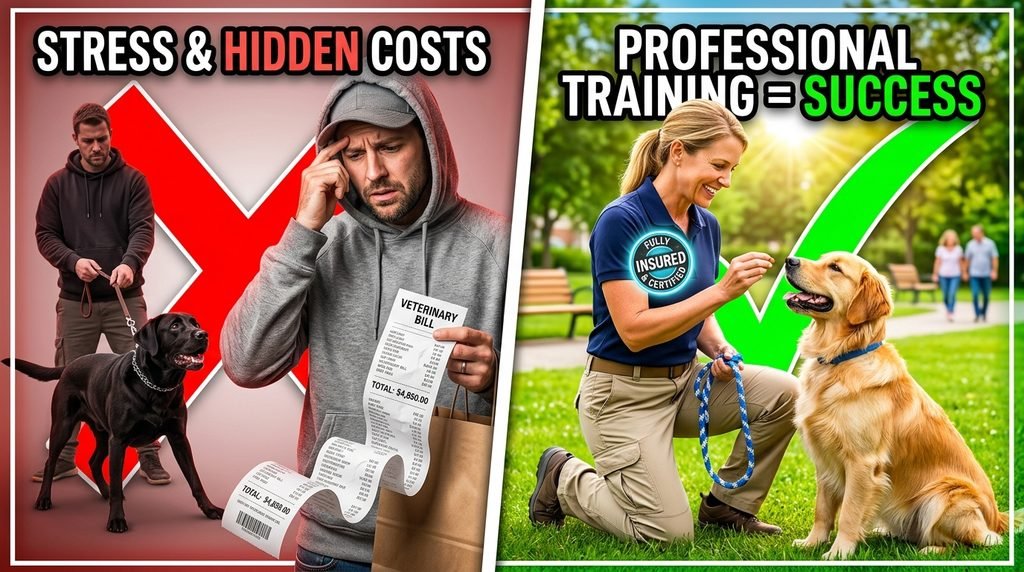
Dog trainer insurance is specialized commercial coverage that pays for veterinary bills, legal fees, and property damage if a canine is injured or causes harm under a professional’s supervision. Owners must verify this coverage to avoid assuming massive financial liabilities during training sessions.
Quick Answer: Dog trainer insurance protects you from paying out of pocket if your dog gets into a scuffle at a facility or escapes during a walk. Generic review sites like Yelp do not verify whether a business carries this crucial protection. You must ask for a Certificate of Insurance (COI) before handing over your leash.
Many pet owners assume that local retail pet stores or highly rated independent instructors automatically carry adequate coverage. Big-box stores often bury broad liability waivers in their fine print, forcing you to assume the risk if your puppy contracts an illness or gets bitten in a crowded group class. Exploring dog trainer insurance facts directly empowers you to make safer choices for your animal.
If assessing legal risks sounds overwhelming, dogstraining.us offers completely safe, stress-free at-home learning resources. Our materials allow you to skip the waivers and keep your dog in a controlled, secure environment.
Key Takeaway: Never drop off your pet without physically seeing a current certificate of liability coverage.
The Core Methodology: How Force-Free Training Reduces Injury and Liability Risks
Force-free training inherently minimizes the risk of physical injury and behavioral fallout by avoiding aversive tools like prong collars or shock devices. This ethical methodology lowers liability claims because the animal experiences less stress and fewer physical corrections during learning sessions.
Positive reinforcement relies on a clicker or verbal marker to reward good behavior rather than punishing mistakes. The American Society for the Prevention of Cruelty to Animals (ASPCA) strongly advocates for positive reinforcement, noting that aversive methods often increase anxiety and aggression. A dog trained with treats and praise is far less likely to redirect aggression onto another dog or human.
Consider what actually happens when a frustrated handler uses a corrective collar in a busy environment. The dog associates the sudden pain with the nearest person or dog, potentially causing a bite incident that triggers an insurance claim. Utilizing humane methods protects your pet’s physical safety and your financial well-being.
Key Takeaway: Humane, force-free methods are not just better for your dog’s mental health; they statistically reduce the likelihood of accidents and liabilities.
How Do I Verify My Dog Trainer’s Insurance and Credentials?
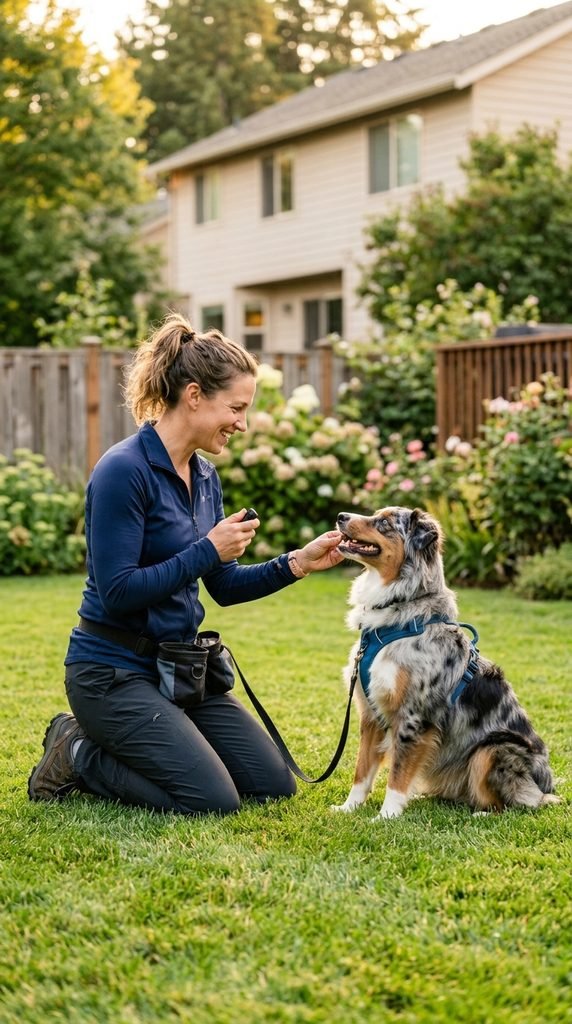
You verify a professional by requesting their certificate of liability insurance directly, specifically checking for Animal Bailee coverage, and cross-referencing their credentials with recognized positive reinforcement organizations. This process ensures the person handling your pet is legally and educationally qualified.
Step 1: Request Proof of Animal Bailee (Care, Custody, and Control) Coverage
Standard general liability policies cover slip-and-fall accidents for humans but explicitly exclude the animals being trained. Animal Bailee coverage is the specific add-on that pays your veterinary bills if your dog is injured while in the professional’s care, custody, and control. Always ask to see the policy declaration page to confirm this specific clause is active.
Step 2: Validate Their Positive Reinforcement Certifications
Anyone can build a website and call themselves a dog behavior expert without holding a single certification. You should check directories for the Certification Council for Professional Dog Trainers (CCPDT) or the Pet Professional Guild to confirm their credentials. Certified professionals are required to complete continuing education and adhere to strict humane practices.
Step 3: Inspect the Training Environment for Safety Hazards
A perfectly insured facility can still present immediate physical dangers to your puppy. Walk the grounds to check for secure double-gated fencing, clean sanitized floors to prevent parvo, and adequate space between working dogs. If the environment feels chaotic or overcrowded, trust your instincts and remove your pet immediately.
Key Takeaway: Checking credentials and requesting a Certificate of Insurance takes five minutes but prevents years of potential legal and medical nightmares.
In-Person Store Classes vs. Self-Paced Ebooks: A Liability & Cost Comparison
Big-box store classes require you to sign broad liability waivers that protect the corporation if your pet gets hurt, whereas self-paced digital guides eliminate third-party physical risks entirely. Training at home puts you in complete control of the environment and outcomes.
Local store classes push expensive weekly routines that often place stressed dogs into close proximity with under-socialized peers. If a fight breaks out, the waiver you signed likely prevents you from holding the store accountable for the veterinary bills. To avoid these hidden dangers regarding dog trainer insurance, the team at dogstraining.us built alternatives that keep your pet safe at home.
Take the case of Sarah, who spent $300 on a corporate group class only to have her timid rescue dog regress due to the chaotic store environment. She switched to comprehensive dog training ebooks and saw immediate progress in her quiet living room. By taking control of the process, she completely eliminated the risk of a third-party incident.
| Feature | Retail Store Group Classes | Self-Paced Ebooks (dogstraining.us) |
| Liability Risk | High (Must sign away your rights) | Zero (Dog stays in your safe home) |
| Insurance Needed | Yes (Facility must carry Animal Bailee) | None (You manage your own dog) |
| Distraction Level | Very High (Other barking dogs, shoppers) | Low (Controlled home environment) |
| Cost Efficiency | Expensive ($200-$400 per 6-week block) | Highly Affordable (One-time purchase) |
Key Takeaway: At-home digital guides offer a safer, cheaper, and more controlled path to obedience than crowded retail store classes.
The 2026 Dog Trainer Vetting Checklist & Daily Routine Chart
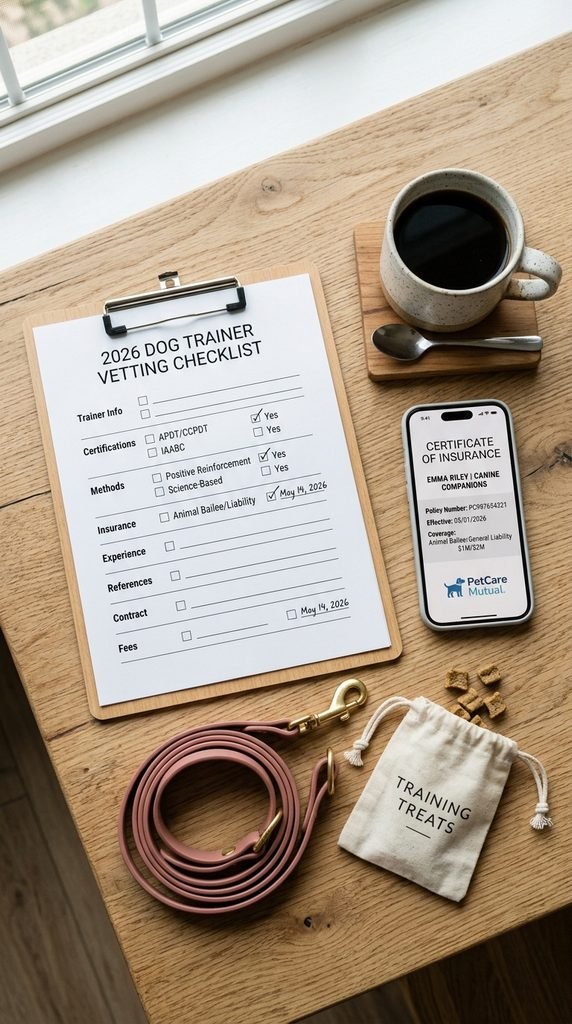
The vetting checklist and daily routine chart provide a printable framework to interview local professionals about their liability policies while offering an eight-week schedule for at-home learning. This tool bridges the gap between hiring safe external help and mastering obedience yourself.
Print this checklist to evaluate any professional you interview, or follow the daily routine if you prefer to train independently.
Part 1: The 2026 Liability & Safety Vetting Checklist
- [ ] Can you provide a current Certificate of Insurance?
- [ ] Does your policy specifically include Animal Bailee (Care, Custody, and Control) coverage?
- [ ] Are you certified by the CCPDT, IAABC, or KPA?
- [ ] Do you require me to sign a waiver releasing you from all liability if my dog is injured?
- [ ] Do you guarantee you will never use shock, prong, or choke collars on my dog?
Part 2: The 8-Week At-Home Positive Reinforcement Routine
- Weeks 1-2 (Foundation): 5-minute sessions twice daily. Focus on “Look at me,” “Sit,” and crate acclimatization using high-value treats.
- Weeks 3-4 (Impulse Control): 10-minute sessions twice daily. Introduce “Leave it,” “Wait” at doors, and loose-leash walking inside the house.
- Weeks 5-6 (Distance & Duration): Add distance to “Stay” commands. Practice recalls across the yard on a long line.
- Weeks 7-8 (Real-World Distractions): Move routines to the front yard or a quiet park. Reinforce all commands around mild distractions.
Key Takeaway: Using a structured checklist ensures you only hire safe professionals, while a daily routine keeps at-home learning strictly on track.
Troubleshooting Common Regressions After a Professional Training Session
Dogs often regress after returning from a professional because they struggle to generalize learned commands to a new environment or a different handler. Owners can resolve this temporary setback by consistently reinforcing the desired behaviors in the home using identical cues.
A professional might achieve perfect obedience in a sterile facility, but your living room is filled with familiar triggers like doorbells and family members. You must bridge this gap by practicing the exact same positive reinforcement techniques your instructor utilized. If you are struggling to replicate their results, you might need better step-by-step guidance.
When an instructor’s methods fail to translate to your home life, consider reviewing our structured pricing and package plans to find a digital guide that fits your exact lifestyle. This allows you to become the expert handler your dog actually needs.
Key Takeaway: True obedience happens when the owner takes an active daily role in reinforcing behaviors at home.
When Should You Skip the Trainer and Hire a Veterinary Behaviorist?
You should hire a board-certified veterinary behaviorist instead of a standard professional when your pet displays severe clinical aggression, extreme separation anxiety, or unpredictable bite history. Standard insured instructors are not medically or legally equipped to diagnose or medicate complex neurological issues.
Even a highly qualified professional with robust dog trainer insurance cannot prescribe anxiety medication or handle dangerous bite-risk cases safely. The American Veterinary Medical Association (AVMA) requires complex behavioral cases to be overseen by a licensed doctor. Pushing an aggressive dog into a standard obedience class puts the animal, the instructor, and the public at immense risk.
Safety Disclaimer: If your dog has caused puncture wounds to humans or other animals, immediately muzzle-train them using positive reinforcement and contact a board-certified veterinary behaviorist.
Key Takeaway: Severe aggression is a medical issue requiring a veterinarian, not a standard obedience problem.
Frequently Asked Questions (FAQ)
Does standard business insurance cover dog bites?
No. Standard general liability only covers human injuries like slip-and-falls at a facility. A professional must carry specific Animal Bailee coverage to cover injuries sustained by your dog or caused by your dog while in their care.
What happens if my dog is injured during a big-box store class?
Most retail pet stores require you to sign a liability waiver before class begins. This waiver usually prevents you from suing for veterinary bills if your dog is injured, leaving you entirely responsible for the costs.
Why is positive reinforcement safer for liability?
Positive reinforcement avoids using pain or intimidation to force compliance. This greatly reduces the dog’s stress and fear, making them far less likely to react aggressively or bite out of self-defense during a session.
Are online dog training classes worth it?
Yes, online resources eliminate all physical liability risks and allow your dog to learn in a low-stress environment. They are significantly more affordable than in-person classes and put the owner in complete control of the pacing.
How do I check if my dog trainer is certified?
You should ask for their exact certification title and search for their name on the official directories of organizations like the CCPDT (Certification Council for Professional Dog Trainers) or the Pet Professional Guild.

Next Steps for Your Dog’s Training Journey
Protecting your pet from liability risks and stressful environments starts by taking their education into your own hands. Skip the confusing insurance waivers and crowded retail classes by downloading a proven, force-free curriculum today. Need help deciding which resource fits your pup? Reach out for direct support and guidance to get started on a safer path.