

Trust Block Reviewed by: Certified Professional Dog Trainer Core Methodology: Force-Free, Positive Reinforcement Last Updated: September 2026
Quick Answer Block Finding reliable dog training denver requires evaluating a professional’s credentials, methodology, and class environment. Local big-box retailers charge roughly $120 to $150 for basic six-week group sessions, while private behavioral consultations often exceed $150 per hour. Owners seeking immediate results often achieve faster behavioral corrections using structured, self-paced digital guides at home before committing to expensive in-person packages.
Denver is an incredibly dog-friendly city, but navigating crowded parks and busy hiking trails requires a well-behaved canine. Many new pet parents immediately search for local retail classes when their puppy starts biting or pulling on the leash. However, rushing into a crowded group environment without establishing basic at-home obedience often sets both the animal and the owner up for frustration.
Instead of waiting weeks for a store class to begin, owners need immediate, actionable management strategies they can implement tonight. The resources at dogstraining.us provide comprehensive frameworks for modifying unwanted actions before they become permanent habits. This guide breaks down exactly how to evaluate local professionals while giving you the immediate tools needed to restore peace in your living room.
Table of Contents
Dog Training Denver: Quick Answer: What to Look for in Denver Dog Training
Evaluating local obedience programs requires checking the instructor for nationally recognized certifications and demanding a strict adherence to force-free methodologies. A quality facility must provide transparent pricing, cap group sizes at six dogs, and require proof of core vaccinations before entry. Selecting an environment that matches the animal’s current socialization level prevents extreme stress and behavioral setbacks.
Many owners turn to dog training reddit communities to find unbiased reviews of local facilities. While peer recommendations hold value, an owner must personally verify that a recommended instructor does not use aversive tools like prong collars or shock devices. The canine education industry remains largely unregulated, meaning anyone can legally charge money for behavioral coaching regardless of their actual expertise.
For example, an owner might bring a highly reactive rescue dog into a loud retail store environment expecting a miracle cure. Instead, the overwhelming sensory input causes the dog to shut down completely, learning nothing while the owner wastes their tuition fee. Building a foundation of trust in a quiet home environment always yields better long-term retention.
Key Takeaway: Verify independent certifications and start with low-distraction home education before exposing a nervous animal to chaotic group classes.
How do I choose the best dog trainer in Denver?
Choosing the best canine professional requires evaluating their formal education, chosen behavior modification techniques, and overall communication style. Owners must prioritize instructors who rely entirely on scientific learning principles rather than outdated dominance theories. A superior coaching service offers clear lesson plans, provides robust post-class support, and teaches the human how to communicate effectively with their pet.
When browsing options, look closely at how a business structures its curriculum and handles fearful animals. Many local retail chains push a standardized curriculum that fails to address specific environmental triggers unique to your household. If your primary issue involves your puppy barking wildly at the mail carrier, a generic group class teaching “sit” will not solve the underlying anxiety.
Consider the logistical reality of attending a rigid weekly appointment across town during rush hour traffic. Missing even one session in a standard six-week program can leave you permanently behind the rest of the group. This is exactly why flexible, expert-designed resources often provide a superior return on investment for busy professionals.
Key Takeaway: Select a professional who tailors their approach to your specific household challenges rather than forcing a rigid, one-size-fits-all curriculum.
The Importance of Force-Free, Positive Reinforcement
Canine behavior modification should always prioritize positive reinforcement because rewarding desired actions creates a willing, enthusiastic learner. According to the American Kennel Club, utilizing operant conditioning and treats builds a stronger bond while actively reducing anxiety. Punishing a dog for making a mistake only suppresses the symptom temporarily while destroying the foundational trust between human and animal.
Imagine teaching a toddler to read by yelling at them every time they mispronounce a syllable. The child will quickly learn to hate reading and avoid the activity entirely. The exact same psychological principle applies when a handler jerks a leash or yells at a puppy for breaking a “stay” command.
Using high-value rewards, such as small pieces of plain chicken or a favorite toy, accelerates the learning process dramatically. By clearly marking the exact moment the animal makes the correct choice, you remove confusion and build their confidence. This scientific approach forms the foundation of all materials provided through our platform.
Key Takeaway: Positive reinforcement builds lasting behavioral changes by fostering trust and enthusiasm rather than fear and avoidance.
Self-Paced Ebooks vs. Weekly Store Classes
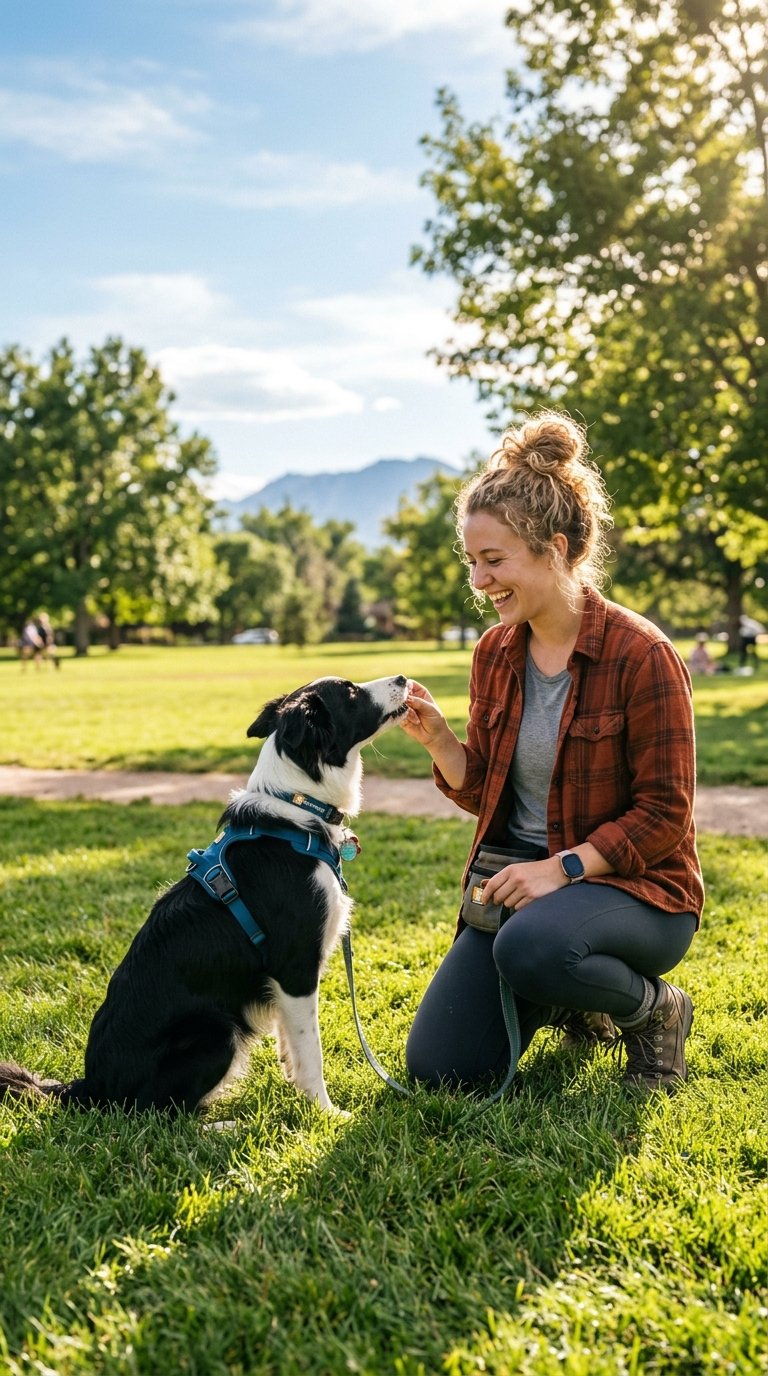
Comparing local box-store group sessions against structured digital learning reveals significant differences in pacing, stress levels, and overall value. Commercial retail classes force easily distracted puppies into highly stimulating environments, which severely limits their ability to focus on new commands. Self-paced digital resources allow owners to teach critical skills in a quiet, controlled living room where the animal naturally feels safest.
Evaluating these formats objectively requires looking at immediate accessibility and long-term retention.
| Evaluation Criteria | Local Big-Box Store Classes | Dogs Training eBooks |
| Immediate Access | Requires waiting weeks for a new cycle to begin. | Instant download; start correcting behavior tonight. |
| Environment | High stress, noisy retail aisles full of strangers. | Low stress, familiar home environment for better focus. |
| Pacing | Rigid schedule; miss a class and fall behind. | Completely self-paced; review difficult concepts anytime. |
| Cost | $120 – $150+ for a basic 6-week curriculum. | Highly affordable one-time purchase with lifetime access. |
| Customization | Standardized for the masses; ignores specific triggers. | Targeted troubleshooting for specific household issues. |
By utilizing comprehensive Dogs Training eBooks, owners avoid the chaos of retail environments entirely. You can practice leash walking in your own quiet hallway before gradually introducing neighborhood distractions. This incremental approach guarantees a higher success rate for highly sensitive or easily overwhelmed breeds.
Key Takeaway: At-home digital guides offer a stress-free, immediately accessible alternative to rigid and distracting retail store classes.
The 8-Week Dog Training Routine Chart (Printable)
Establishing a consistent daily obedience routine builds predictable boundaries that actively reduce canine anxiety and destructive habits. Puppies and newly adopted rescues thrive when they know exactly when they will eat, eliminate, play, and learn. Implementing a structured schedule ensures that critical socialization windows are maximized without overwhelming the animal’s developing nervous system.
Below is an original, highly effective schedule designed to establish basic manners rapidly.
Verified for 2026: The 8-Week At-Home Routine & Behavioral Chart
- Weeks 1-2: Foundation and Trust
- Morning: 5-minute name recognition and eye contact drills using part of their breakfast kibble.
- Afternoon: Leash acclimation inside the house; let them drag a light leash to desensitize the feeling.
- Evening: Crate games; toss high-value treats into the kennel with the door open to build positive associations.
- Weeks 3-4: Impulse Control
- Morning: 5-minute “Sit” and “Down” sessions using a clicker to mark the exact behavior.
- Afternoon: Doorway manners; require a calm “Sit” before opening any exterior door to prevent bolting.
- Evening: Handling exercises; gently touch paws, ears, and mouth while feeding treats to prepare for veterinary visits.
- Weeks 5-6: Advanced Distractions
- Morning: “Leave It” command practice using low-value bait and high-value rewards.
- Afternoon: Loose leash walking in the backyard or a quiet driveway, stopping immediately if tension occurs.
- Evening: Place command; teach the animal to settle on a specific mat or bed while the family eats dinner.
- Weeks 7-8: Real-World Application
- Morning: Distance recalls; practice “Come” from across the yard using a long lead for safety.
- Afternoon: Controlled neighborhood walks; reward engagement and eye contact when passing mild distractions.
- Evening: Duration stays; increase the time the animal must hold a “Sit” or “Down” while you move around the room.
If you skip the foundational trust-building in the first two weeks, the real-world application in week eight will inevitably fail. Consistency remains the most critical variable in canine education.
Key Takeaway: Following a structured daily routine prevents behavioral gaps and establishes clear communication faster than sporadic weekend sessions.
How do I stop my dog from regressing at home?
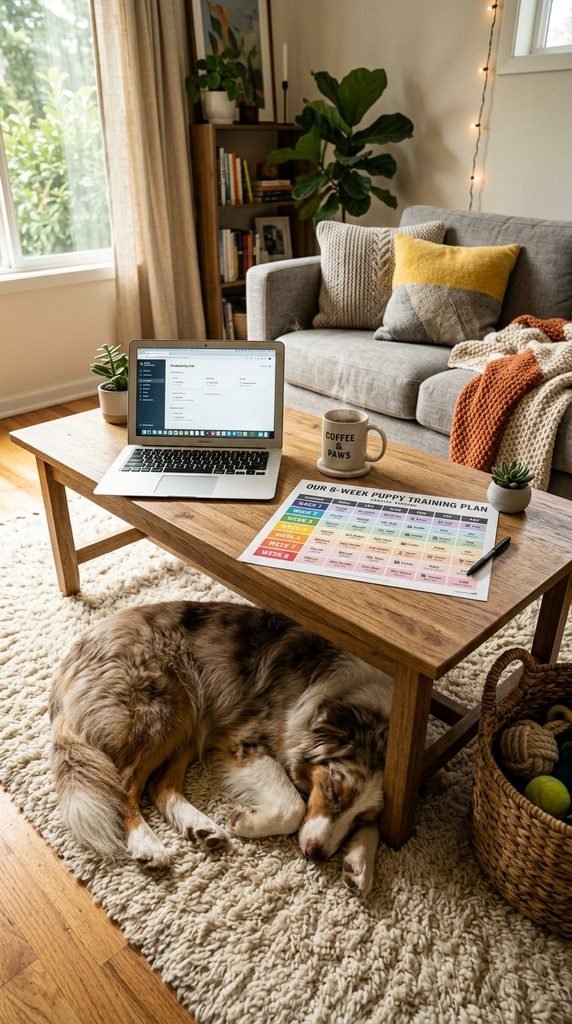
Stopping a dog from regressing at home requires identifying the specific environmental trigger and immediately lowering the criteria for success. Owners must temporarily remove the animal from the overwhelming situation and practice the failed command in a completely distraction-free room. Reinforcing the basics with high-value treats rebuilds the animal’s confidence before reintroducing the previous challenge.
Regression is a normal part of canine development, particularly during the adolescent phase between six and fourteen months of age. A puppy that perfectly executed a recall command at four months might suddenly act entirely deaf at eight months. This happens because their brain chemistry is changing and the outside world has suddenly become vastly more interesting than your treats.
When regression strikes, use this behavioral troubleshooting decision tree to course-correct immediately:
- Did the animal refuse a known command? -> Move them to a quieter room, reduce the distance, and try again with a better reward.
- Are they suddenly pulling on the leash again? -> Stop walking the moment the leash goes tight, wait for them to look back at you, reward the eye contact, and proceed.
- Is the chewing habit returning? -> Restrict free-roaming privileges, utilize the crate when unsupervised, and provide appropriate frozen Kong toys.
Key Takeaway: Treat behavioral regression as a signal to temporarily lower your expectations and reinforce foundational obedience in a quiet environment.
Safety First: When Should I Contact a Certified Veterinary Behaviorist?
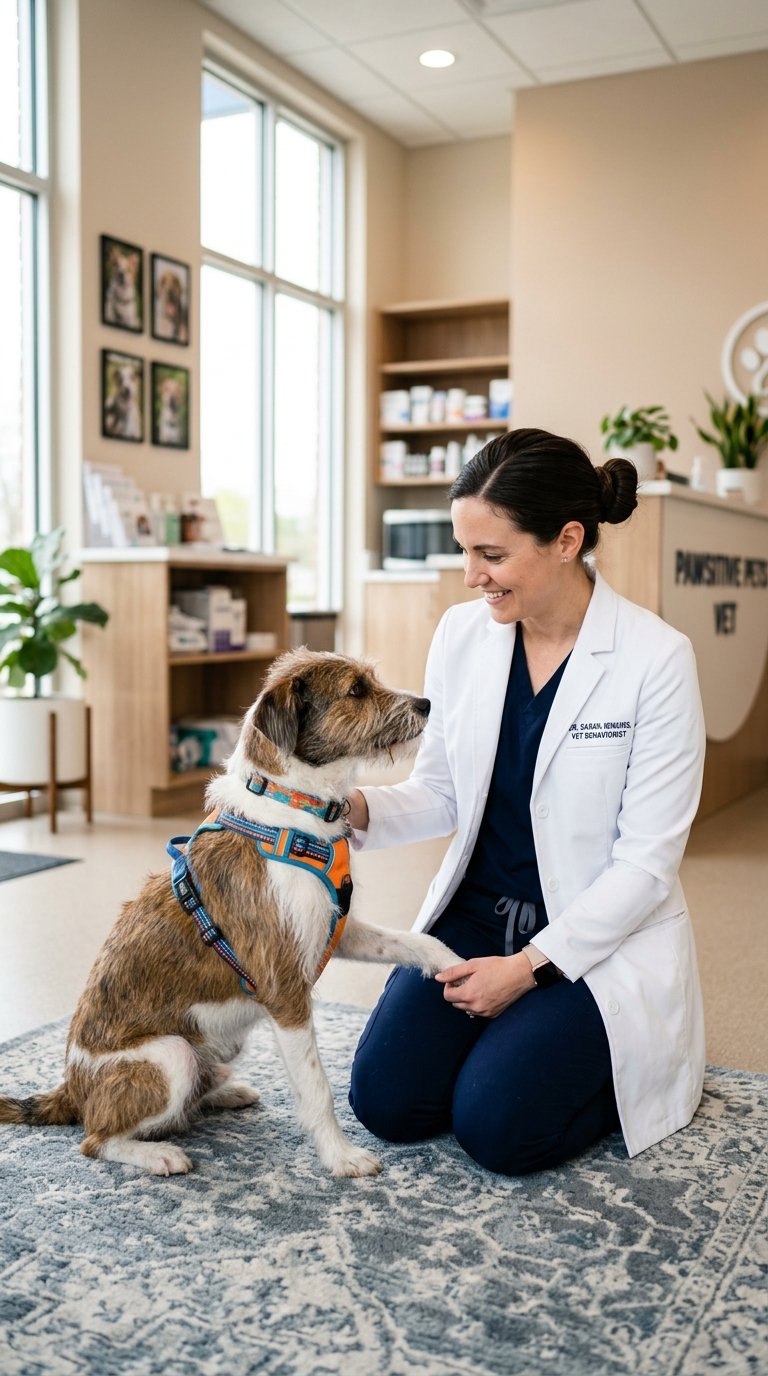
Contacting a certified veterinary behaviorist is absolutely necessary when an animal displays severe aggression, extreme panic, or a bite history. Standard obedience coaches are not medically qualified to diagnose complex neurological issues or prescribe necessary anti-anxiety medications. A veterinary professional possesses the advanced education required to implement safe, scientifically validated modification protocols for highly dangerous or traumatized animals.
If your pet is breaking their teeth trying to escape a crate during a thunderstorm, standard treat-based exercises will not resolve the panic. Severe separation anxiety and resource guarding often require a dual approach involving behavioral medication and structured counter-conditioning. Attempting to suppress severe reactivity with punishment will invariably escalate the aggression and put the human household at serious physical risk.
Always verify credentials through reputable organizations like the International Association of Animal Behavior Consultants (IAABC) before hiring help for severe issues. Never trust an uncertified individual who promises a “quick fix” for deep-rooted aggressive tendencies.
Key Takeaway: Severe aggression or extreme phobias require the specialized medical and psychological intervention of a certified veterinary behaviorist.
Frequently Asked Questions About Dog Training in Denver
Are online dog training classes worth it? Yes, digital classes provide exceptional value by allowing owners to practice in a low-distraction home environment. They are significantly more affordable than local sessions and allow you to review complex techniques repeatedly until you master the timing.
How do I stop my puppy from biting? Immediately redirect puppy biting by offering an appropriate chew toy the moment teeth touch your skin. If the biting persists, stand up, calmly remove your attention, and walk away to teach them that biting ends all playtime.
How much do private lessons cost in Colorado? Private in-home behavioral consultations in the metropolitan area typically range from $125 to $200 per hour. Specialized packages for reactivity or off-leash reliability often cost thousands of dollars and require multi-week commitments.
Can an older rescue animal learn new commands? Absolutely, adult rescues are highly capable of learning new behaviors through consistent positive reinforcement. Older animals often possess better focus and impulse control than young puppies, making them excellent candidates for rapid behavior modification.
What equipment do I need to start teaching obedience? You need a standard six-foot leather or biothane leash, a comfortable flat collar or front-clip harness, and a treat pouch. Avoid retractable leashes, as they teach the animal that pulling forward creates forward momentum.
Your Next Step for a Well-Behaved Dog
If you are tired of chaotic walks, embarrassing jumping, and endless frustration, you do not have to wait for a local retail class to open up. You can start transforming your pet’s behavior right now from the comfort of your own living room. Check out our affordable pricing and packages to instantly download the step-by-step guides you need to build a calm, confident, and obedient companion today.